Continuum robotics
ROSAIA
A flexible robot observes its own shape, turns curvature into motion and brings vision, control and learning into one physical platform.
Technologies
- ZED cameras
- ArUco
- Kalman filtering
- AI kinematics
- ShapeServo
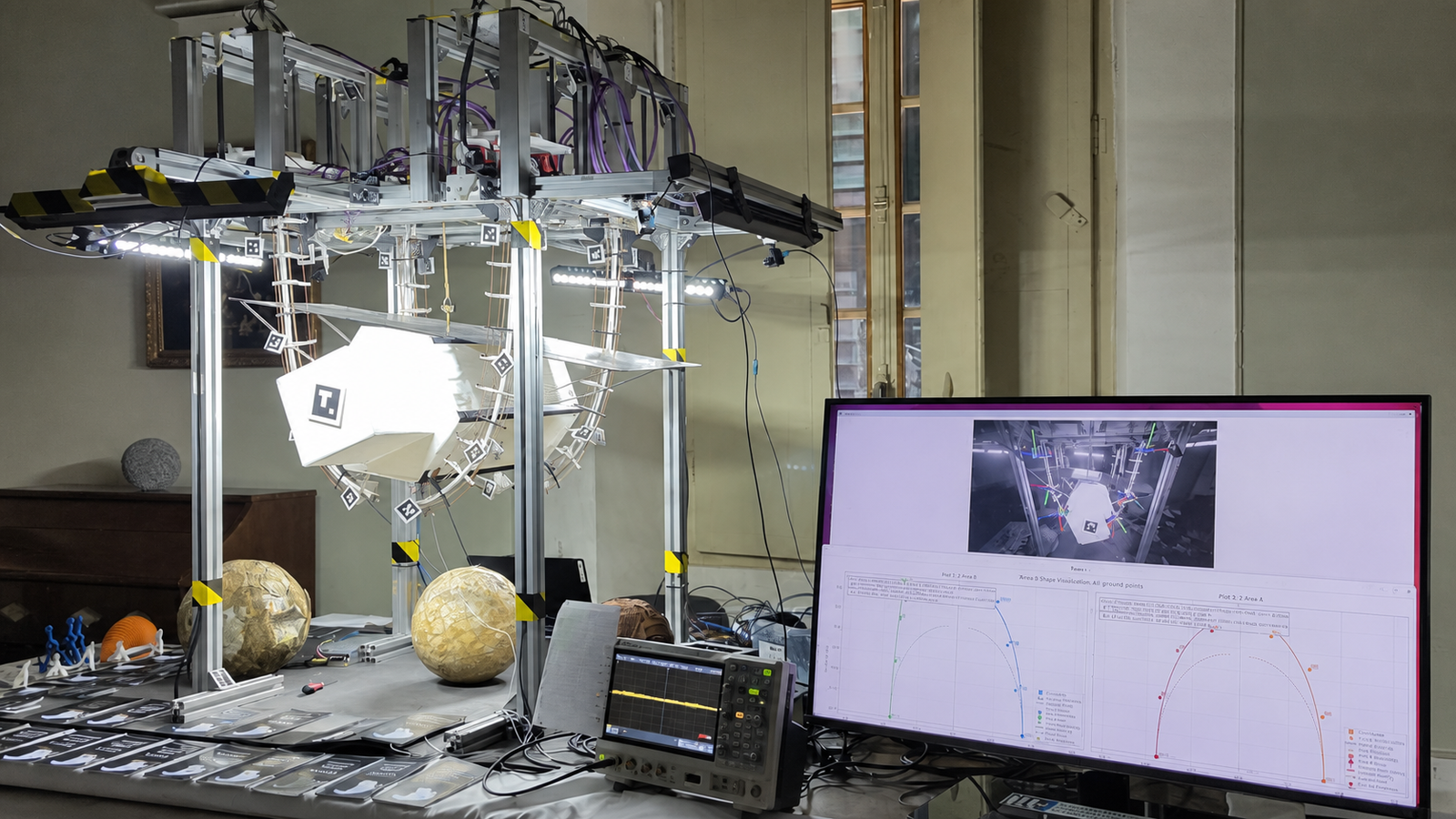
Body
Continuum robot with four arms
Perception
Visual shape feedback
Research thread
Control, learning and calibration
A body that changes shape
A continuum arm bends along its entire length. Actuation, shape estimation and control remain coupled as the geometry changes through every movement.
ROSAIA turns that changing body into a shared space for mechanics, visual feedback and artificial intelligence.
Shaping the intelligence
My work connects visual shape estimation, intelligent control, identification and calibration with the physical platform. Experiments move between individual arms and coordinated motion across multiple arms.
Each layer follows the same thread, observe the shape, interpret the motion and return a command to the robot.
ROSAIA in motion
Watch the platform with four arms move, then follow the same research into a compact setup with two arms.
Beyond rigid geometry
Flexible arms point toward machines that can reach, adapt and make distributed contact in complex physical spaces.
ROSAIA provides a place where those possibilities can be seen in the robot body, tested through experiments and translated into new forms of control.